Process
How Professional Biohazard Remediation Works
The stages of a professional remediation project, from first assessment to final review.
When contamination has spread beyond a single spot, or a whole property needs to be made safe again, decontamination is a structured project, not a one-day wipe-down.
Property decontamination applies when contamination affects multiple rooms, building systems or the structure itself. Examples include long-term hoarding conditions with biological waste, extended decomposition, widespread sewage contamination or a large-scale incident in a commercial building.
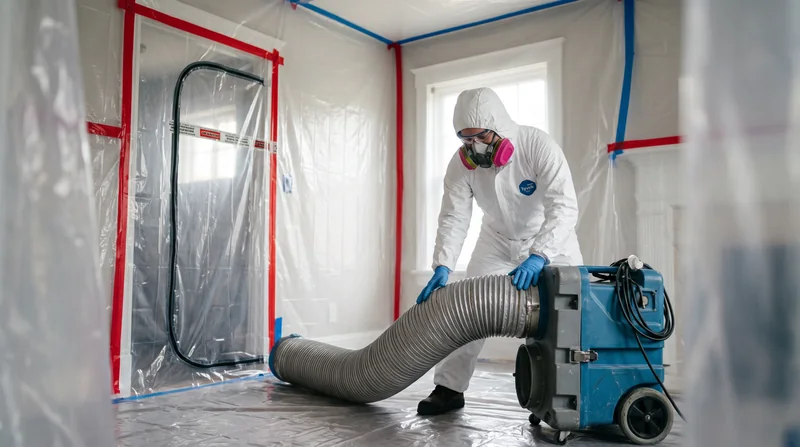
Plastic sheeting, zip-door entries and taped seams isolate the work area so that contamination is not carried to clean spaces.
Negative air machines with HEPA filtration pull air through filters and out of the work area, keeping the pressure inside lower than outside so that airborne particles are less likely to escape.
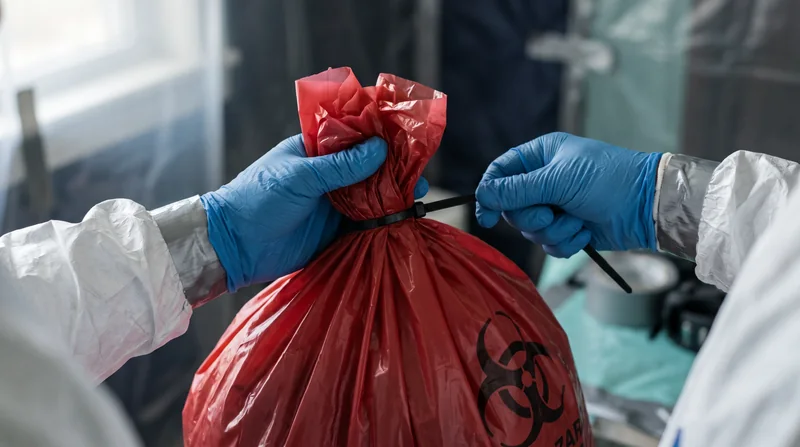
Contaminated materials are removed in a planned sequence, from the least to the most affected areas, and bagged or containerized for regulated disposal.
Structural surfaces such as studs, subfloors and concrete are cleaned and treated. Sealants may be applied where odor persists.
Air scrubbers and other equipment are used to clean the air and reduce odor until the space is ready for review.
Decontamination is not reconstruction. If walls, floors or fixtures need replacement, a general contractor typically handles it afterward. Some providers offer restoration services. Others coordinate with contractors.
Property decontamination projects can be complex. Ask providers to describe their qualifications, insurance and approach to the specific hazards at your property, and avoid agreeing to work that has not been explained to you.
Cleaning removes visible soil. Decontamination removes or neutralizes harmful contaminants, often with containment and regulated waste handling.
It depends on the size, materials and conditions. A provider can describe a realistic timeline after reviewing the property.
In some cases independent testing is appropriate, such as air or surface sampling by a qualified third party. Ask providers and your insurer whether it makes sense in your situation.
The stages of a professional remediation project, from first assessment to final review.
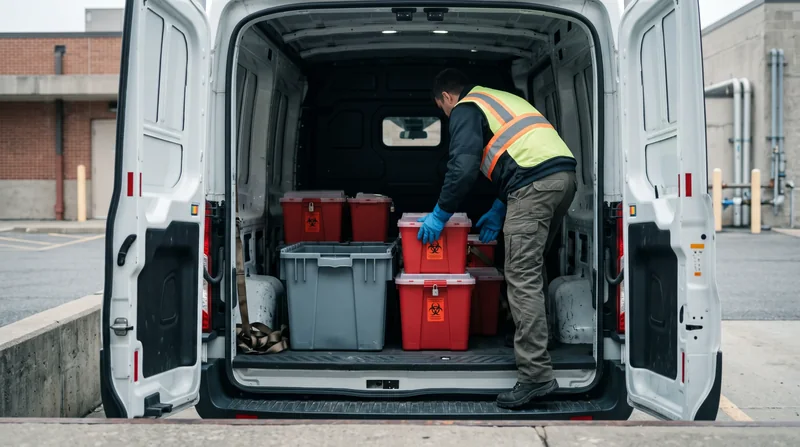
Why contaminated materials cannot go in the trash, and what responsible disposal looks like.
About this service. Youngstown Biohazard Cleanup is an independent referral service. We connect you with independent providers; they perform the work and set their own availability, qualifications and terms. Availability depends on location and provider capacity.
Contact us to discuss your situation and connect with an appropriate professional service provider.